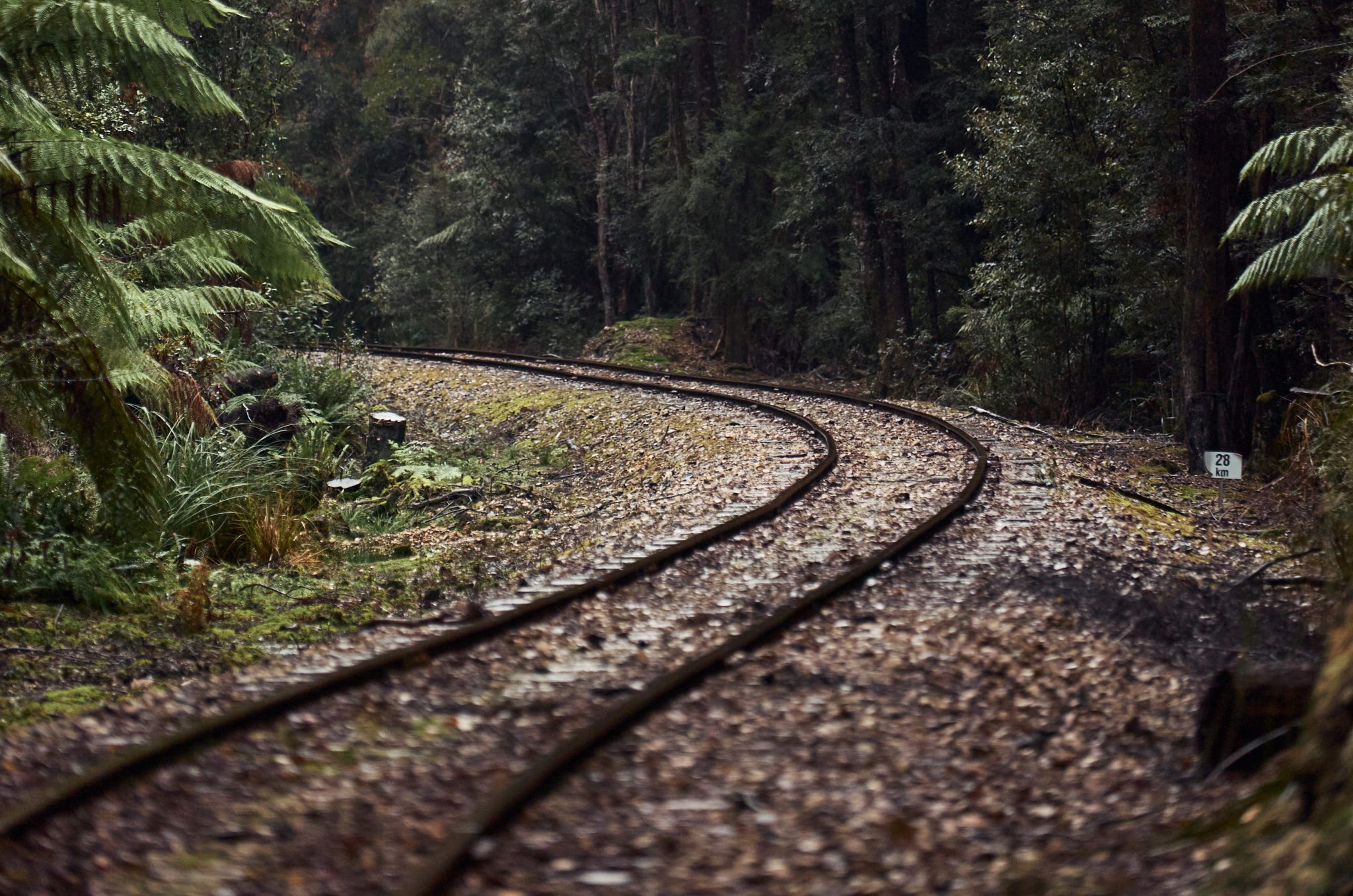
More than one hundred and thirty years ago, pioneers built this remarkable railway through some of the most unforgiving terrain in Tasmania. They worked and lived in conditions that would challenge anyone today, driven by the need to support their families and by the belief that a railway could change the future of the West Coast. Against the odds, they made it happen.
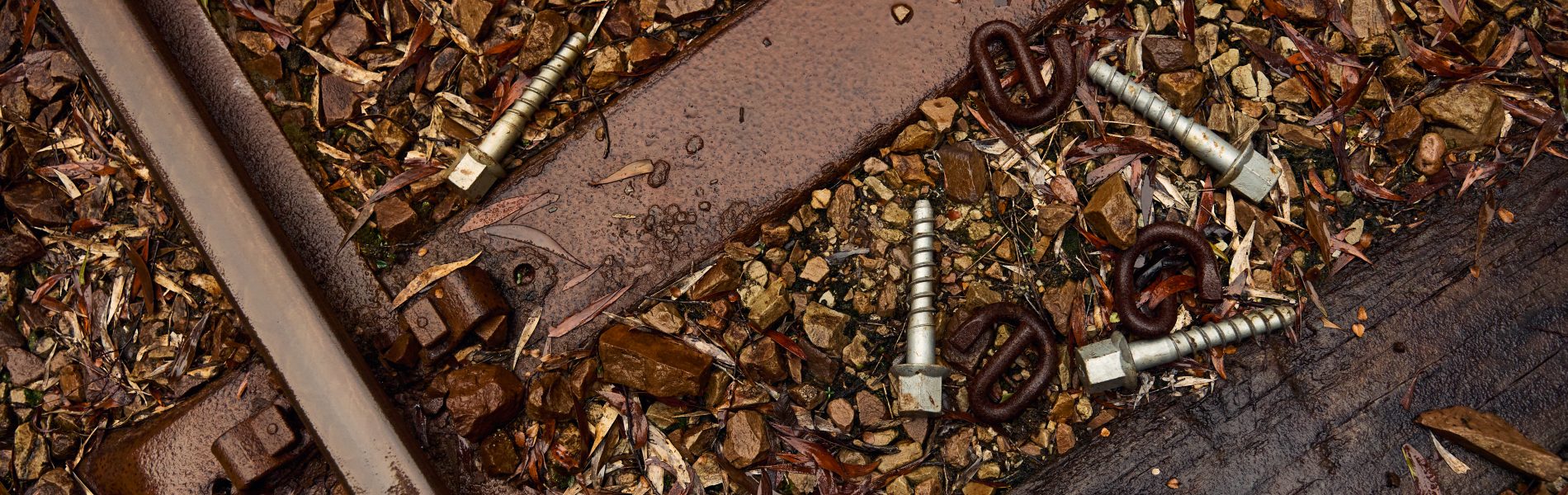
The line we travel on today covers 34.5 kilometres of track and includes 296 culverts and 40 bridges. That means there are more bridges than kilometres of railway. Sleepers hold the rails in place and keep the track at the correct 1067 millimetre gauge so our trains can travel safely.
During the planning stages it was decided that the rack and pinion system invented by Swiss engineer Dr Carl Roman Abt would be used. The climb between Halls Creek and Dubbil Barril reaches a gradient of 1 in 16, and no locomotive of the time could handle that on its own, especially while carrying ore. Both the track and the locomotives were fitted with the necessary Abt equipment before operations began in 1897. This seven kilometre section remains the steepest steam haul in the southern hemisphere.
In November 1899, Marion Sticht drove the final dog spike into the line at Regatta Point Station, marking the official opening of the full railway between Queenstown and Strahan.
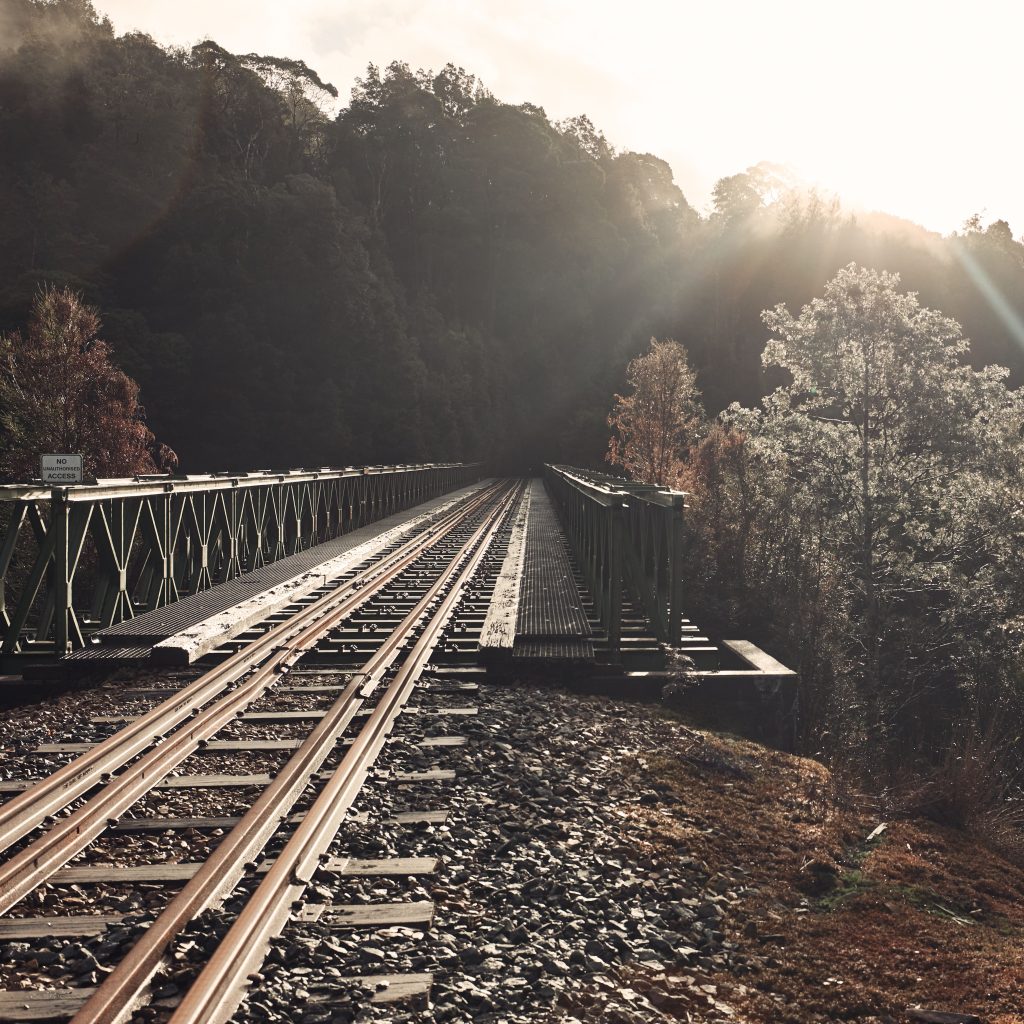
Bridge 34 – Quarter Mile Bridge
The Quarter Mile Bridge, originally known as the King Bridge, could easily have been called the Quarter Mile Quandary. The bridge you can see today is the third version, and only a fraction of the length of the original.
The first bridge was a 240 metre wooden trestle built with the main line in 1896. Its construction was gruelling. Pylons had to be driven 18 metres into silt and sediment before they reached anything solid. Maintenance was constant, as the structure stood no chance against the force of the King River, which flooded often and with serious power.
A second bridge followed, built in a similar style but reinforced with steel. Remnants of this version can still be seen downstream when you pass over the modern structure. The improvements were not enough. Floodwaters rose so high they reached the wheels of passing trains, and at times covered the entire bridge, bringing services to a halt. Maintenance became so costly and time consuming that the Quarter Mile Bridge contributed significantly to the railway’s closure in 1963.
The third and current bridge is an ex-army Bailey Bridge that spans about 90 metres. Since the creation of Lake Burbury in 1992, flooding is no longer a threat and the bridge now sits comfortably above the one-thousand-year flood level. It may not be a quarter mile long, but it is certainly the most dependable version of them all.
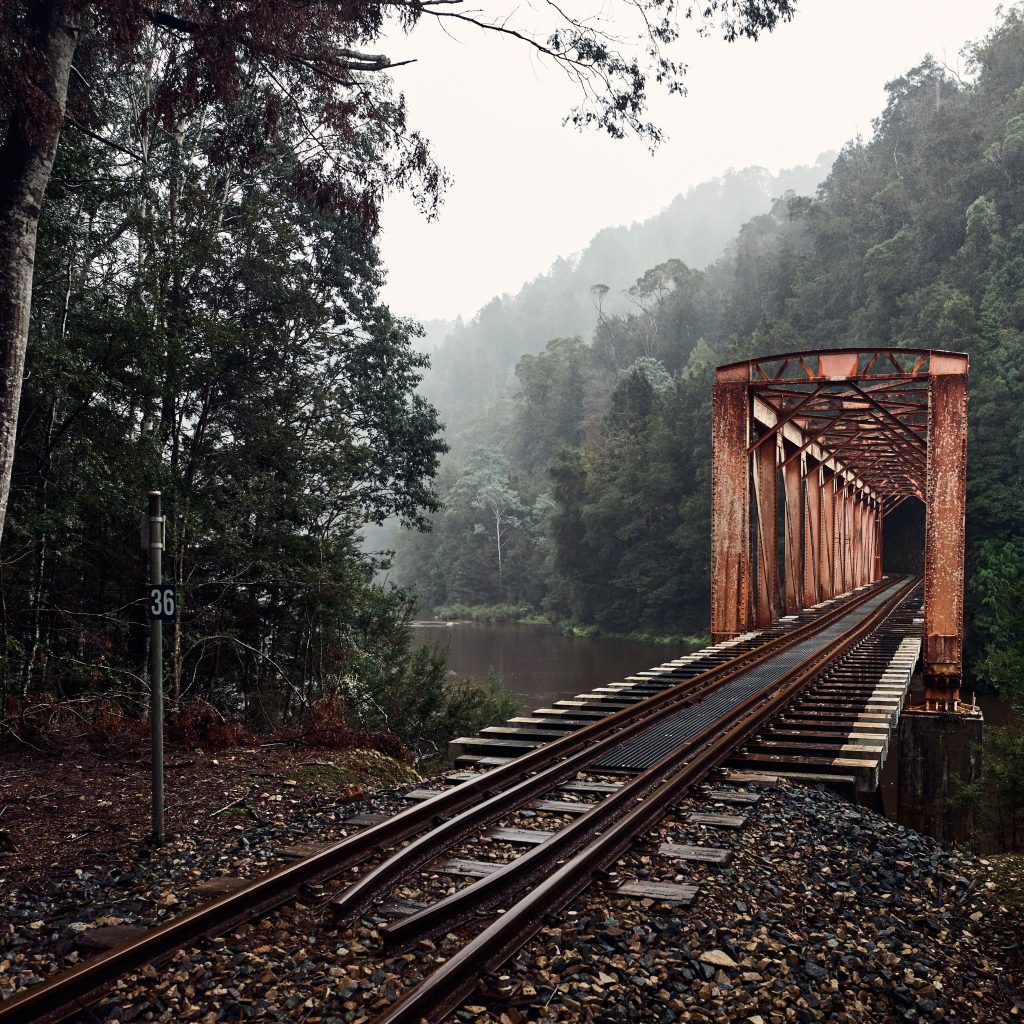
Bridge 36 – Iron Bridge
The designers of this railway faced a new problem at almost every bend. They had to push through relentless rainforest, climb over the Rinadeena Saddle and thread a line along a 240 metre gorge. Then came the King River, which they needed to cross not once, but twice.
After the costly headache of the Quarter Mile Bridge, the team knew they needed a smarter plan for the next crossing. Instead of attempting another wooden trestle, they purchased a pre-built metal bridge from the busy docks of London and shipped it to the far side of the world. From there it was taken to the remote port town of Teepookana to be assembled on site. Sounds easy, right?
Surprisingly, it mostly was. Getting the 110 tonnes of iron into position was the real challenge. The engineers had planned ahead. They built the bridge on top of two side by side rail carts, which allowed the whole structure to be pushed carefully across the river. To keep it from tipping into the water, a barge fitted with scaffolding held the bridge steady as it edged forward. Once the span lined up with its pylons, the barge was weighed down with sandbags and drifted out from underneath, leaving the bridge locked neatly into place.
That was in 1899. More than a century later, this structure still stands as the only original bridge left on the line.
Four men lost their lives during the construction of the railway. Three were killed in separate landslides, one near Strahan and two near Rinadeena, and another died while working on the Quarter Mile Bridge. Considering the harsh conditions of the 1890s, the unforgiving terrain and the limited safety standards of the era, it is remarkable that the toll was not higher. Their contribution is a lasting part of the story of the West Coast.
The rainforest that surrounds the railway once supplied the timber that built towns, mines, wharves, boats and, most importantly, the sleepers and bridges of the line. Local axemen, known as piners, cut these trees and hauled them out along rough tramways and corduroy roads paved with logs. Their work helped shape the early infrastructure of the West Coast.
Before the railway arrived, piners often felled huge old growth trees and left the stripped, branded logs on the riverbanks. During the wet season, floods would carry the logs downstream to Strahan, where the piners would collect them again. This practice was discouraged by the late 1880s after a new bridge at Lynchford was damaged by fast moving timber swept down the Queen River.
The environment here is unforgiving, yet strangely beautiful. It is a place that has always demanded innovation and courage, where people risked everything in pursuit of opportunity. The motto find a way or make it rings as true today as it did when this remarkable railway was built.